Conservation easements in Chile
How an agreement recorded at the Chilean real estate registry protects land over the long term, even when it changes hands.
The derecho real de conservación (DRC), Chile's version of a conservation easement, protects the ecological attributes of a piece of land over the long term, within a formal legal framework. In this article we explain what it is, when it makes sense, how it is set up and why it can be key for projects that want to live alongside forest, water and biodiversity, and not just be close to them.
In Chile, Law 20,930 created a legal instrument that allows property owners to place voluntary environmental restrictions on their land. Unlike state protection, such as national parks or reserves, the DRC arises from an agreement between private parties, with unprecedented flexibility to decide what is protected and how the land is managed.

An instrument of legal certainty
The DRC is a property right recorded at the Conservador de Bienes Raíces, Chile's real estate registry. Its main feature is that it runs with the land (propter rem): the restriction follows the property regardless of who owns it. An environmental promise thus becomes a binding legal commitment.
Through this instrument, the owner agrees with a third party (for example, an NGO, a foundation or a public body) on certain prohibitions or obligations: from restricting future subdivision or banning hunting, to limiting construction or protecting a watershed.
The restriction follows the property, regardless of who owns it.
When does a DRC make sense?
Not every property needs one, but it is especially useful in three scenarios:
- Purpose-driven real estate projects. Developments that stand out by offering a guaranteed natural setting. The DRC assures buyers that the common area or the forest around their home will not be altered in the future.
- Selling land with a legacy. When an owner wants to sell their land and make sure the ecosystem they have cared for over decades remains intact, whatever the new owner's interests.
- Managing ecosystem services. When the goal is to capture value through carbon credits, environmental offsets or water source protection, the DRC provides the legal framework to formalize those assets.
Setting it up: the conservation standard
A DRC is established by public deed, and it is advisable to accompany it with a management plan or conservation standard. This technical document defines what is being protected: the health of a wetland? The connectivity of a biological corridor? The density of the native forest?
The law allows it to be agreed for a fixed term or indefinitely. Most conservation projects choose perpetuity, so that restoration efforts are not lost when the land passes to the next generation. There is also always a holder of the right, with the authority to verify that the restrictions are respected. That role gives the system its technical seriousness.
Impact on the future value of the property
There is a common belief that protecting land reduces its value, because it limits intensive use. However, the scarcity of well-preserved nature and the demand for places rich in biodiversity can turn a DRC into a source of added value.
A property with a conservation easement is an asset with lower risk and greater environmental stability. It offers a guarantee about its surroundings that conventional zoning rules cannot. At Natura Austral we see the DRC as a key tool for those who understand that, in this century, the value of land is tied to its ability to remain ecologically functional.
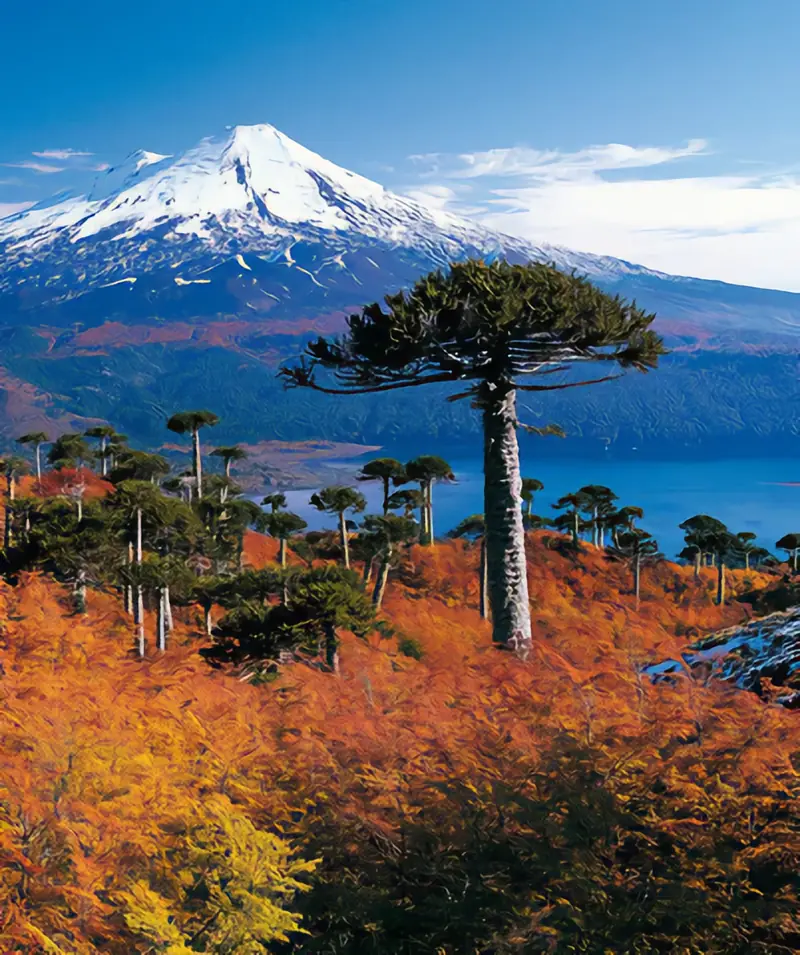
A tool for living on the land with care
The DRC moves us from an extractive mindset to one of stewardship. The idea is to organize activities so that human presence does not degrade the living fabric that sustains the property, without banning its use. In essence, it is the step from owning a piece of land to looking after a territory.